
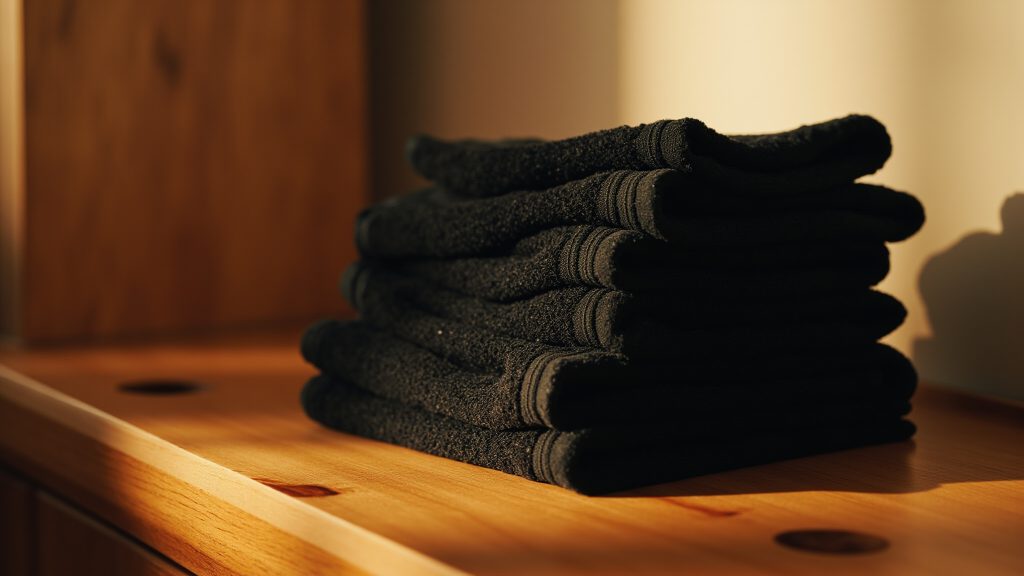
Why Black Towels Are Trending in 2026
Walk into any bathroom featured on Pinterest or Instagram this year. And you’ll likely spot the same design anchor: deep, moody textiles that turn a utilitarian space into a private retreat. Black towels sit at the center of that shift. Offering a spa-like contrast against white tile, brushed nickel fixtures, or warm oak vanities.
This isn’t just a passing filter trend-it’s part of a broader move toward dark. Cocooning interiors that feel intentional and grounded, especially in primary bathrooms where homeowners are skipping the all-white palette in favor of something with more depth. If you’re exploring this aesthetic, you might also want to consider how your bathroom rug color complements the dark towel look.
Beyond the visual payoff, a black towel set earns its keep in real-world households. If you’ve ever watched a white towel develop a gray ring around the hem after three washes. You already understand the appeal: black hides everyday stains-makeup residue, coffee splashes, toddler handprints-far more gracefully. For busy families or anyone who doesn’t run laundry daily, that’s a genuine convenience, not a style compromise.
But don’t assume every black towel performs the same. Dark dyes bring their own quirks: loose lint that clings to skin. Fading into a dull charcoal after repeated hot-water cycles, and stubborn water spots that show up as pale mineral streaks once the towel dries.
That’s why the selection process matters more here than with lighter shades. You’ll want to check fiber composition. Weave density, and dye quality before you commit-especially if you spot a towel set on sale and feel tempted to stock up without reading the label. A bargain only counts if the towels still look rich and absorbent after a year of use.
The Hidden Problems: Fading, Lint, and Water Marks
Black towels look great in a staged bathroom photo. Daily use is another story if you don’t pick carefully. The three most common complaints – fading, lint, and water marks – all come down to manufacturing quality. Knowing what to check before you buy can save you. From replacing a black towel set after just a few months.
Fading is the biggest culprit. Low-quality dyes, especially sulfur-based ones used on cheap cotton, break down quickly in warm water and with detergent agitation. After five or six washes, a deep charcoal can turn dull and uneven gray. Look for towels labeled “reactive dyed” or “colorfast” on the packaging. Reactive dyes bond chemically with the cotton fibers instead of just coating them.
So the color holds through dozens of wash cycles. If the label doesn’t mention the dye process, assume the worst.
Lint is another telltale sign of poor construction. Short-staple cotton fibers – the kind used in budget towels – break loose during washing and.
Cling to the towel’s surface. On dark fabrics, that lint is immediately visible, especially after drying. Combed cotton removes short fibers before spinning, while zero-twist towels use longer, unbroken loops that shed far less. Both are worth the premium.
Water spots are the sneakiest issue. Black fabric shows mineral deposits and soap residue like a fingerprint on a car hood. A high-GSM towel – 600 grams per square meter or above – with a plush. Dense weave absorbs water quickly and dries faster. That means less time for minerals to settle into the fibers.
Before you commit to any 3 bath towels in a set. Run a quick quality check: read the fiber length (long-staple cotton like Egyptian or Supima is best), feel the weight in your hand, and rub the surface against your cheek. A soft, substantial towel that doesn’t shed on contact is your best bet for keeping that deep black look intact.
Material Comparison: Egyptian Cotton vs. Bamboo vs. Microfiber
When you’re investing in a black towel set. The fiber composition determines everything from daily absorbency to how the deep color holds up after dozens of wash cycles. Here’s how the three dominant materials stack up for a bathroom upgrade.
Egyptian Cotton remains the benchmark. Its long-staple fibers create a dense.
Plush weave that’s both soft against skin and highly absorbent-critical when you’re drying off after a morning shower. Unlike standard cotton, these extended fibers resist lint shedding and fading, which matters enormously for dark hues. A black set made from Egyptian cotton won’t turn gray or develop patchy wear after a few months.
If you spot discount designer towel sets at outlets like Nordstrom Rack or HomeGoods. Check the label for “long-staple” or “Giza 45” certification; that’s where the real value hides.
Bamboo offers a silky, naturally antibacterial surface-a smart pick for humid climates like Florida or the Gulf Coast. It resists fading better than cotton, but it’s less absorbent per square inch and typically runs $10-$15 more per towel. For a guest bath where style trumps heavy use, bamboo works.
Microfiber is the budget workhorse. It’s lightweight, quick-drying, and completely lint-free, making it ideal for gym bags or travel kits. But it lacks the plush heft of cotton and can feel slick rather than absorbent for full-body drying. At $8-$12 per towel, it’s a practical stopgap, not a long-term bathroom centerpiece.
For a premium black towel set. Egyptian cotton-or its American cousin, Supima-remains the gold standard, blending durability with the rich, matte finish that anchors a modern bathroom palette.
What to Check in the Label: GSM and Dye Quality
Before you add that black towel set to your cart, flip it over and read the fine print. The two numbers that matter most are GSM and the dye method. GSM, or grams per square meter, tells you exactly how dense the fabric is. For a bath towel you want to step out of the shower into, aim for 600-700 GSM.
That’s the sweet spot for thickness and absorbency. A lower GSM of 300-400 feels lighter and. Dries faster, which works for a guest bath or gym bag, but it won’t give you that plush, spa-like wrap really.
Dye quality is just as critical, especially for black towels, which can turn gray or muddy after a few washes. Look for fiber-reactive dyes.
These bond chemically with the cotton fibers and resist fading, even with hot water and bleach-free detergent. Steer clear of towels with printed designs or logos; those sit on the surface and. Will crack or peel over time. A solid black towel set on sale is often a better bet than a patterned one at full price.
Also check for the Oeko-Tex Standard 100 certification. It guarantees the towel is free from harmful substances.
Which matters when you’re pressing this fabric against your face and skin daily. A quality black towel set typically runs $30-$60 for three to four pieces. Discount designer sets can deliver real value, but always verify the GSM and material breakdown. A low-GSM “luxury” label is just marketing fluff.
And if you’re picking up a matching hand towel set. Apply the same rules: same dye quality, same GSM range, or the colors won’t match after a few cycles.
Care Tips to Keep Black Towels Looking New
A premium black towel set can elevate your bathroom’s aesthetic, but keeping that deep, rich hue takes a deliberate routine. Start by washing your black towels separately for the first three to four cycles. This stops dye from bleeding onto lighter fabrics-and vice versa-while letting excess pigment rinse out safely. Stick with cold water and though. The gentle cycle; heat opens up the fibers and speeds up color loss, which is the quickest way to dull an otherwise striking set.
Skip fabric softeners and dryer sheets altogether. They coat cotton fibers with a waxy residue that hurts absorbency and leaves black towels feeling stiff over time. Instead, add one cup of white vinegar to the rinse cycle every few washes. It breaks down detergent buildup, neutralizes odors, and helps lock in color without any chemical film. Your towels will come out softer and more absorbent than with any commercial softener.
For drying, tumble on low heat or line dry when you can. High heat shrinks cotton and fades dye, so low-and-slow is the rule.
Pull towels out right after the cycle ends to avoid wrinkles setting in-black fabric shows creases more than lighter shades. As for frequency, wash your towels every three to four uses to keep bacteria at bay, but don’t over-wash.
Each cycle strips a little color. So a balanced schedule-roughly once a week for daily users-keeps your hand towel set fresh without cutting into its lifespan. And while you’re refining your bathroom routine, don’t forget that the same principles apply to your floor coverings—check out this guide on bath mats that don’t slip to complete the look safely.
Verdict: When a Black Set Is Worth the Premium
If your bathroom aesthetic matters enough that you’re willing to commit to a care routine-separate washes. Cold water, and air drying-a premium black towel set is a smart splurge. The visual payoff is real: deep, rich color that hides minor stains and elevates the space instantly. But if you’d rather not babysit your linens.
Stick with white or lighter shades that tolerate bleach and hot-water refreshes without drama. The sweet spot though? Watch for seasonal sales at Target.
Walmart, or Bed Bath & Beyond (now online-only) to land discount designer towel sets at nearly half price. Before you buy. Always scan recent reviews and confirm the return policy-quality varies wildly between brands, and even a well-reviewed set of 3 bath towels can disappoint if the dye job is sloppy. A little homework now saves you from a drawer full of gray-ish regrets later.


