
The Great Bath Mat Showdown: Absorbency, Drying, and Safety
Step out of any American shower and. You’re facing a wet-floor hazard, plus the nagging question of whether that mat will start smelling like mildew by Thursday. The three contenders each solve a different problem.
Chenille gives you a bath mat that soaks up water like a thirsty towel. Making it the go-to for households where someone always tracks puddles across the tile. Diatomaceous earth is the modern minimalist’s pick: a stone-like slab that offers a bath mat quick dry in minutes. Resisting mold and bacteria without ever needing a spin in the washer. PVC, meanwhile.
Wins on the safety front, an anti slippery bathroom mat with rubber backing that stays put even on slick porcelain, though it sacrifices absorbency and can trap moisture underneath.
Before you buy. Weigh what matters most: absorbency for post-shower comfort, drying time to avoid that musty smell, slip resistance for kids and seniors, and how often you’re willing to haul it to the laundry. In most US bathrooms. From suburban master suites to rental apartments, chenille suits daily showers, diatomaceous earth fits busy households that air-dry everything, and PVC belongs near tubs where safety trumps softness though. The right bath mat absorbent choice depends on your floor, your routine, and your tolerance for weekly washing. If you’re still weighing your options, our Best Bath Mats 2026 guide breaks down top-rated picks for every budget and style.
Chenille Bath Mats: Plush Comfort and Superior Absorbency
Step out of a hot shower onto a chenille bath mat and. You get it right away: that thick, cloud-like softness that turns your bathroom into something close to a spa.
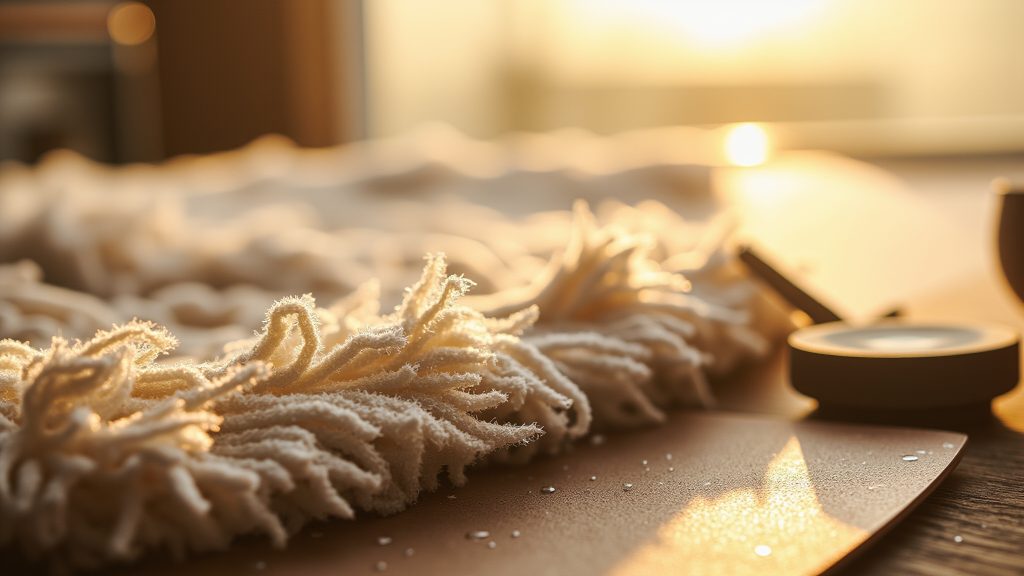
Chenille is made from fluffy loops of highly absorbent cotton or microfiber. Giving it a velvety feel that harder materials like diatomaceous earth or PVC just can’t match. Those looped fibers create thousands of tiny pockets that pull moisture off your feet fast. Which is why these mats are the go-to for households that care more about comfort than quick-drying convenience.
The main selling point is absorbency honestly. A good chenille mat can soak up a surprising amount of water. Which explains why thick bath rugs are so common in master bathrooms. They also come in tons of colors and. Patterns-think cream colored bath rugs for a neutral, airy vibe, sage bath rugs to add a calming earthy tone, or deep navy and olive green if you want something bolder.
You’ll often see bath rug sets that include a matching toilet lid cover and. Contour mat, so coordinating your bathroom decor takes zero effort. For a more polished look. luxury bath rug sets with higher pile and reinforced edges are worth the splurge.
That plushness comes with trade-offs, though. Chenille takes much longer to dry than stone or PVC mats. And if you leave it bunched up or sitting in a humid corner, mildew can become a real problem. You’ll want to hang it over the tub rod or lay it flat after every shower. And plan on washing it weekly-most chenille mats are machine-washable, but air-drying is a must to avoid shrinkage. For a deeper look at keeping your mat fresh, check out this guide on bath mat mold prevention.
Reversible bath rugs are a smart fix here: flip them over midweek so. Both sides get a chance to dry out, which stretches the time between washes.
Sizing matters too. For long. Narrow bathrooms, a 24 x 60 bath rug fits perfectly in front of a double vanity or a standard tub, giving you full coverage without awkward gaps. Just measure your floor space before buying-chenille mats run true to size. But the thick border can make them feel a bit larger than the listed dimensions.
Diatomaceous Earth Stone Bath Mats: Quick-Dry and Mold Resistance
Tired of stepping onto a soggy, musty-smelling rug every morning? A diatomaceous earth stone bath mat might be what your bathroom needs. It’s made from fossilized diatoms-microscopic algae with highly porous silica.
Shells-and it pulls moisture away from your feet almost instantly. Fabric mats rely on evaporation; this stone uses capillary action to do the work though. So it dries in minutes, not hours.
The real payoff is bath mat quick dry performance. No damp environment means mold and mildew don’t get a foothold. Cleaning is simple: wipe it down with a damp cloth or rinse it in the tub.
And you’re done. That’s why it’s also a solid pick for a mat for outside shower. Where moisture and airflow are tough to manage.
What’s the catch? It’s hard underfoot-no plush cushioning-and it can crack if you drop it on tile. Mineral buildup may slow absorption over time. But occasional light sanding with fine-grit paper keeps it working like new.
For a bath mat small bathroom, its slim profile saves floor space. At $30-$60 on Amazon or Target, it’s a reasonable mid-range option for mold-conscious households.
PVC Shower Mats: Slip Resistance and Durability
If staying upright on a wet floor is your main concern. A pvc shower mat does the heavy lifting honestly. These mats come with a rubber or vinyl backing.
Often reinforced with suction cups or a textured surface that grips both the tub floor and your feet. The upsides are simple: they grip wet porcelain or fiberglass well. Hold up through daily use, and cleaning means rinsing them off or wiping them down with disinfectant spray.
But there are trade-offs. PVC mats don’t absorb water, so puddles sit on top until you squeegee or air-dry them. The surface feels hard underfoot and can get sticky, especially in humid climates. A fresh mat also tends to carry a chemical. Smell that fades after a few days of airing out.
You’ll mostly see these inside the shower or tub. But they work fine as a non slip bathroom runner under a decorative rug – just check that the rug’s backing doesn’t trap moisture.
For homes with elderly members or young kids, this is the safest option you can buy. The suction cups lock onto the tub floor and cut fall risk significantly. When you’re shopping. Look for listings labeled as an anti slippery bathroom mat or a bath mat and shower mat combo – both terms point to the same slip-resistant design. Just grab a separate absorbent mat for outside the shower so you can step out dry. If slipping has been a recurring issue, our guide to non-slip bath mats covers the best options for 2026.
Side-by-Side Comparison and Recommendation Matrix
Here’s how the three materials stack up on the five factors that actually matter in a bathroom.
| Material | Absorbency | Drying Time | Slip Resistance | Maintenance | Comfort |
|---|---|---|---|---|---|
| Chenille | Excellent – soaks up a post-shower puddle instantly | Slow – can stay damp for 12+ hours | Poor – slides on tile without a backing | High – machine wash weekly to avoid mildew | Plush. Soft, spa-like underfoot |
| Diatomaceous Earth (DE) | Good – wicks moisture fast | Very fast – dry in 2-3 hours | Excellent – stone-like grip stays put | Low – wipe down, no washing needed | Firm and cool, not cushioned |
| PVC / Vinyl | Fair – beads water rather than absorbing | Fast – non-porous surface air-dries | Excellent – rubber backing grips wet floors | Low – rinse or wipe clean | Firm, slightly sticky when wet |
Recommendation Matrix by Household
- Families with kids: Go with PVC. It’s the safest pick for little ones who splash water everywhere, since the rubberized surface won’t shift mid-step.
Look for a black and white bathroom mat that hides toothpaste splatter and soap scum. – Seniors or anyone with mobility concerns: PVC or DE wins on slip resistance.
A diatomaceous earth stone mat is especially stable because really. It doesn’t move at all, even on a wet tile floor. – High-traffic bathrooms: DE is your workhorse – it dries in minutes. So multiple showers a day won’t leave a soggy mess.
If you prefer softness. A chenille option works, but only if you’re committed to washing it every few days.
Beyond the Basics: Price, Looks, and Sizes
Price-wise, chenille is the budget-friendly entry point ($15-$30), while DE runs $30-$60 and PVC sits in the middle. Aesthetically, chenille offers the widest range – think grey bathroom rug set.
pink bathroom mats, or olive green bathroom rugs – while DE comes in neutral stone tones and PVC leans utilitarian. Size options matter too: you can find a long bath runner for a double vanity. An extra large bathroom rug for a master bath, or bathroom rugs sets 4 piece that include a toilet lid cover and contour mat. Just double-check bath mat sizes before ordering – chenille tends to run larger. While DE is often limited to standard 24″ x 16″ rectangles.
The Bottom Line
- Maximum absorbency? Choose chenille – nothing beats it for stepping out of the shower onto a cloud. – Hate mildew? Choose DE – it dries so. Fast that mold never gets a foothold, making it one of the best bath rugs for humid climates. – Need slip-proof? Choose PVC – it’s the only. Material that stays glued to the floor even when soaked.
Look, Final tip: Don’t feel locked into one material. A chenille rug layered over a PVC liner gives you the plush comfort of the former with the safety of the latter – and. It’s a trick many homeowners use to protect both their feet and their floors. For bathroom rugs for toilet areas. A smaller DE stone mat is a smart complement to a larger chenille piece near the tub. And if you’re dealing with a mat that just won’t stay put, these 7 non-slip solutions actually work.


