
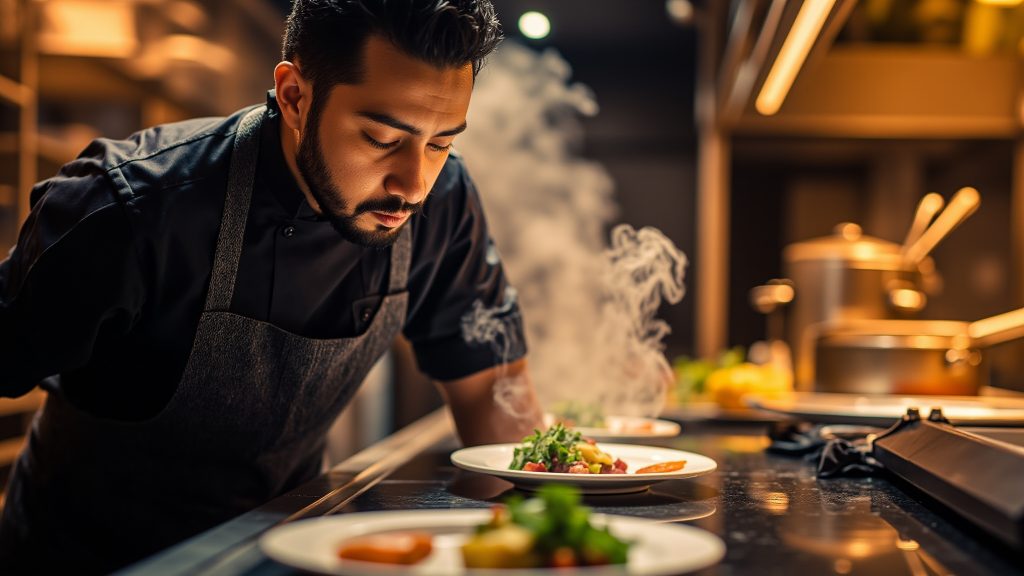
The Sous Chef Role: Why Your Apron Needs to Keep Up
Walk into any busy American kitchen – a cramped New York bistro or a sprawling Texas steakhouse – and really. You’ll spot the sous chef before they say a word. They’re the one expediting tickets. Checking every plate against the pass, and stepping onto the line when a line cook falls behind. That role demands more than culinary skill; it demands a presence.
That reads as authority the moment you walk through the door. A standard cook apron, built purely for utility, simply doesn’t carry that weight. It’s cut for wiping hands and absorbing spills, not for projecting leadership during a Friday night rush.
The right sous chef apron bridges the gap between function and command. It needs structured fabric that holds its shape. Reinforced stitching that survives constant movement, and pockets positioned for quick access to tasting spoons and thermometers – not bulky pouches that catch on oven handles. When you’re plating a $48 ribeye or tasting a demi-glace mid-service. You need freedom of motion without the apron shifting or bunching.
That’s why an apron for restaurant leadership roles is designed differently: longer coverage. Adjustable cross-back straps, and a tailored fit that signals professionalism while you’re training new hires or calling out fires.
In a profession where every second counts, your gear either supports your pace or slows you down. A standard cook apron might get you through prep. But it won’t hold up to the constant pivoting, bending, and reaching that defines a sous chef’s shift. Choose an apron that matches the role you’re stepping into – not just the one you’re leaving behind.
Key Differences: Fabric, Length, Neck Strap, and Pockets
The first thing you’ll notice when you pick up a. sous chef apron versus a standard cook apron is the fabric. Sous chef aprons are built from 12-16 oz cotton duck or canvas-heavyweight material that shrugs off hot splatter. Knife nicks, and constant washing. Standard cook aprons, by contrast, typically use 8-10 oz poly-cotton blends.
That lighter weight feels fine for a host or bartender. But in a high-volume kitchen, it wears through quickly and offers little barrier against heat or moisture.
Length matters just as much. A proper sous chef apron runs 36-40 inches. Covering your torso and upper thighs so you can lean over a hot grill or reach across a prep table without exposing your chef coat. Standard aprons stop around the waist or mid-hip-fine for front-of-house tasks honestly. But useless when you’re bent over a stockpot for hours.
The neck strap is where many cooks feel the difference by hour three of a double shift. Sous chef aprons use a wide. Adjustable strap that spreads the apron’s weight evenly across your shoulders and upper back, reducing that familiar ache at the base of your neck. Standard cook aprons often come with thin ties that dig into your skin the moment you load up your pockets.
And those pockets? A serious apron for restaurant work needs depth and placement. Sous chef aprons include multiple deep pockets sized for a thermometer. Tasting spoons, pens, and order tickets-plus a towel loop on the hip. Standard aprons give you one or two shallow pockets that spill everything when you bend over.
These aren’t cosmetic upgrades; they directly impact comfort, durability, and how efficiently you move through a busy service. If you’re buying a food service apron for daily line work. The heavier build isn’t a luxury-it’s the difference between replacing gear every few months and owning one that lasts years.
Why Sous Chef Aprons Cost More (and Is It Worth It?)
The price gap between a sous chef apron and a standard cook apron isn’t just marketing-it’s engineering. Premium materials like 12-ounce heavyweight canvas or Japanese denim cost significantly more to source and. Sew, especially when the garment is cut and stitched in the USA. That fabric alone can account for $10-15 of the retail price before a single rivet is set honestly.
Then come the reinforcements. Double-needle stitching at stress points, solid brass rivets at pocket corners, and adjustable leather or metal hardware-these aren’t decorative. They’re what let a $45 sous chef apron survive 300+ industrial wash cycles. While a $15 standard cook apron starts fraying at the neck loop after a month of daily service. Do the math: replacing a cheap apron every 8-10 weeks costs $78-$97 per year.
A quality sous chef apron at $50, even with annual re-stitching, beats that over a three-year horizon.
For a culinary school grad stepping into a sous chef role, the purchase also signals something intangible. Walking into a new kitchen with a worn-in canvas apron says you. Understand the job’s physical demands-that’s credibility you can’t buy with a knife set.
But beware the label inflation. Some brands slap “sous chef” on a standard cook apron and double the price. Before you pay, verify the functional upgrades: fabric weight (at least 10 oz), bar-tacked stress points, and adjustable cross-back straps. If those aren’t there, it’s just a marketing gimmick. For a deeper breakdown of what separates a quality build from a gimmick, check out our guide to choosing the perfect chef apron.
Top 3 Sous Chef Aprons for 2026
Working the line means your apron takes a beating. The right sous chef apron comes down to durability, pocket placement, and neck comfort during a 12-hour service. These three models hold up in serious kitchens.
Hedley & Bennett Signature Apron is still the gold standard. The 12 oz canvas breaks in nicely. The adjustable neck strap spreads weight evenly, and those deep front pockets keep thermometers, towels, and tasting spoons in place without sagging. Made in LA, it’s the apron for restaurant pros who need gear that survives daily abuse. You’ll spot it in Michelin-starred kitchens across the country.
Chef Works Pro-Series Bistro Apron offers surprising toughness for the price. The poly-cotton blend shrugs off stains and wrinkles, and reinforced stress points at the neck and waist handle constant tugging. Budget-conscious cooks and culinary school grads building their first kit get real value here without losing function honestly.
Tilit Chef Apron moves easily between kitchen and front-of-house. Heavyweight denim or canvas options come with multiple pockets, including a hidden phone slot. The tailored cut looks sharp during expediting or a quick floor check. It’s the most versatile pick if you’re splitting time between stations.
All three are available at Amazon, Sur La Table, or directly from the brands, priced between $35 and $70. That’s a reasonable investment for gear that’ll outlast your next few stages. If you’re still building your kit and want more affordable options, our roundup of budget chef aprons under $30 is worth a look.
Making the Switch: From Standard Cook Apron to Sous Chef Apron
Start by auditing your daily mise en place. If you’re constantly patting your thighs for a thermometer. Pen, or tasting spoon, a sous chef apron’s structured pockets will save you dozens of steps per service. The standard cook apron offers a single shallow pouch-fine for a towel. But useless for the tools that define your station.
A food service apron with divided. Reinforced pockets keeps your Thermapen within a two-second reach, which matters when the pass is screaming.
Adjust the neck strap so the weight settles on your trapezius muscles, not your cervical spine. A properly fitted sous chef apron distributes the load across your shoulders, cutting fatigue during 10-hour doubles. Break in a new canvas apron by running it through a warm wash with vinegar twice; the fabric softens and.
Begins to mold to your hips and chest. Pair it with a crisp chef coat and non-slip clogs-upscale kitchens expect that polished silhouette. Remember: the apron is a tool, not a costume. Use it to stay organized and protected, and it will earn its keep.
Caring for Your Premium Apron: Tips to Make It Last
A good sous chef apron is an investment in your daily comfort, so treat it right. Wash it in cold water with a mild detergent to keep colors from fading and fabric from shrinking. Skip the bleach unless the apron is white. Hang it to dry, or use low heat in the dryer-high heat weakens stitching and breaks down the weave. Oil and.
Grease stains need immediate attention; a dedicated stain remover works best, and line splatter is stubborn but manageable if you catch it early. For front-of-house or fine-dining shifts, iron the apron while it’s slightly damp to keep that crisp, professional look. If you’re working daily.
Rotate between two aprons so each food service apron gets time to air out and recover between services. And if you’re thinking about adding your name or your restaurant’s logo for a more polished, branded look, our guide to custom embroidered aprons for restaurants covers the key design and fabric decisions.
